- SheHacksPurple Newsletter
- Posts
- SheHacksPurple: December 2025


The SheHacksPurple Nerd-a-licious Newsletter
💜 Hit ‘reply’ to send me a message! I read every response and love hearing from you. 💜
Hello Everyone!
First of all, if you are a React or Next.JS developer and you are using it for your backend, I need you to upgrade if you haven’t already (see more at the link). Don’t worry, I will wait while you go do that, please read this later if you are affected.
Now onto the regular newsletter! My audiobook for Alice and Bob Learn Secure Coding is officially available on Audible! If you buy it, in any format, and you like it, please rate it. If you don’t like it, please message me and let’s talk. I would like to hear your feedback.
Last week I started recording my first lessons for DevSec Station, the new learning community and platform I am working on. The first on-demand course is going to be about C, C++, and embedded systems. We aren’t open yet, but you can sign up to be notified when we do at the link if you like! I’m super excited to be diving into something challenging and new for me (embedded devices), and to create a lot of content. Today I am finishing up the threat modelling module.
I have added quite a few new travel dates for next year that you may want to check out. I am also going to take the rest of December off to just record content, visit my family, and try to relax (not my speciality, but I will do my best). I hope that you have a wonderful December, no matter where you live, what holidays you observe, and that perhaps you get to have a few days off to do something special.
For now though, I have a couple questions for developers reading this: 1) What is the BIGGEST software conference in the world? 2) What is the BEST software conference in the world? And lastly, 3) Which software conference would YOU like to see me at? I’m trying to figure where to focus my efforts for applying for conferences, and it would be so great to have advice from smart people like you. Just hit reply to answer. Thank you in advance. 💜

Last year at SnowFroc with HD Moore and Jason Haddix. Legends!
This could be you!
Usually there’s an ad here, but this month there isn’t. Let me know if you want to be here next month.
New Content!
Alice and Bob Learn Secure Coding - the audiobook, read by yours truly!
How To Get Your First Job In Cybersecurity - a blog post by me
The Psychology of Bad Code - part 1, a new blog series by me, about why we create insecure code, and how we can do better. This is part one, and also this month’s article!
I hosted a webinar, Metrics, Models, and Mindsets: A Conversation About the Future of AppSec, with my friends Spyros from Smithy and Aram! Blog post and video at the link.
The Elephant in AppSec podcast! “Why AppSec is Breaking” Audio, Video
I was on the Women in Security and Privacy (WISP) Podcast
Random Tanya Thoughts on Video: securing vibe coded apps built by non-software engineers
Video of my talk “Using Artificial Intelligence, Safely“ at ExtremeJ conference
Upgrade React and Next.JS RIGHT NOW - Video about new vuln
Developers urged to immediately upgrade React, Next.js, an article by Howard Solomon, but with many comments from me
Events!
December 18th, 6:30 pm GMT, OWASP Leiria (online, free) with Corey J.
January 14, 2026, Keynote for Elephant in AppSec Conference, online, free
Feb 2, Keynote for ThreatModCon Hackathon 2026, online, free
Feb 10-13, 2026 - Wild West Hackin’ Fest - Mile High, I will be giving training and also a talk! In person!
March 5, 2026 - Keynote for 28th Annual Victoria International Privacy & Security Summit (VIPSS), in person in Victoria, BC
April 16 & 16 (note the date change), 2026 - Keynote for SnowFroc in Denver, CO, USA, I’m the opening keynote so please don’t sleep in! In person
May 5-8, 2026 NDC Toronto! YES, my fav European conference series is coming to Canada, I am so happy! In person
July 2026: Keynote for DevOpsDays Lima in Peru! That’s right folks, I’m going back to South America! In person
August, 24-26, 2026 Keynote for Sikkerhetsfestivalen (Security Festival) in Lillyhammer, Norway! In person
The Psychology of Bad Code
In this blog series I will explore several known bad developer behaviors that lead to insecure software, as well as how we can combat them by applying behavioral economic interventions. This series is an expansion upon my thoughts from my conference talk ‘Threat Modeling Developer Behavior: The Psychology of Bad Code’. The slides are available here.
What if insecure code is not a result of laziness, a lack of knowledge, or malice? What if software developers are doing their best, but they have been set up to fail?
I have never understood why people make the decisions that they do, and it is something I have always been quite curious about. I have misunderstood social situations many, many times, especially when someone has attempted to show romantic interest in me (they practically need to hit me over the head to get me to notice). I have never understood gentle nudges and have been told that I am too forward and blunt repeatedly (which I have tried to ‘work on’ over the years). I am a person who tries to use logic to make decisions whenever possible, so when I see others making decisions that I feel are illogical, in the past I had assumed they were using their emotions to make those decisions. Trying to understand other people has been both a struggle and fascination for me, for a very long time.
Somewhat recently, I discovered behavioral economics, the study of how humans make decisions… And a whole new window into other people’s thoughts was opened to me. Although I have read books previously on therapy and psychology types of topics, behavioral economics focuses on motivations in a different way that makes a lot of sense to my science-loving brain. As I read more books and saw some of the ideas play out in real life before me, I wondered if I could apply these ideas to my work.

I felt a science-y meme might fit here!
First, I started thinking about nudges, because I read the book Nudge by Richard Thaler & Cass Sunstein. Was there a way that I could nudge software developers into writing more secure code? Was there a way that I could work this into my training and the communities that I built, so we could all get better results? For those of you who don’t know me and my work, I’ve been trying very hard to change our industry for the better. I want the world to create more secure software. And whatever way I can help achieve that, I’m in.
Back to the economics… Here I was, working at Semgrep, and they asked me to try to get a speaking slot at Black Hat. At that point I had been rejected I think 6 or 7 years in a row, and I was really not in the mood for more rejection from them… But the call for papers asks for ‘novel’ research, and I thought maybe this could be it. No one else (that I could find on the internet at the time) had tried applying behavioral economics to application security problems as far as I knew, and therefore it might be ‘novel’, and so away I went to start my research. (Spoiler alert: black hat did not accept my talk.)
Since behavioral economics is about behaviors, I started looking into what are ‘known bad’ developer behaviors. Developers make the code, so I figured I needed to work on them, plus I was one for 17 years, meaning I am one of them, which helps me understand them better. I wanted to see if there were any ‘known bad’ behaviors that I knew would cause insecure code. OMG there are so many well documented bad behaviors! And I could see, with my application security hat on, how they turned into less-secure decisions and outcomes. From there I made a list of ten that I wanted to figure out if I could find a way to try to fix them. Here’s what I came up with:
Vibe Coding (AI-assisted, fast, context-less)
Tight Deadlines → Insecure Shortcuts
Copying from Online Forums Without Context
Obsession with New Tech / Shiny Frameworks
Avoiding Documentation
Repetitive Code / Lazy Error Handling
Committing Untested Code
Overengineering / Showing Off
Ignoring Compiler Warnings
Not Reviewing Code (or Fake Reviewing)
From there I wanted to investigate WHY people behaved these ways. I truly believe that developers, and everyone else that work on software, care about the final product. I believe they want to create high quality apps, and that almost everyone now-a-days values safety, privacy, and security in the apps they build and use. You can argue with me about it if you want in the comments, but I do not believe it for one second when people say “devs don’t care about security”. I believe, and have believed all along, that developers have way too many demands and priorities set out for them and they are trying to appease many people, teams, and requirements, and that security is just one of many. I think they care about security, because it’s a part of quality. And if they were doing these bad behaviors because of behavioral economics, not because “they don’t care”, then my belief would be correct. Confirmation bias here we come!
For each one of the behaviors, I tried to match it to a cognitive bias and/or heuristic. Time for some definitions!
A cognitive bias is a systematic and recurring error in thinking, processing information, and interpreting one's surroundings. These mental shortcuts are unconscious and lead to deviations from objective rationality in judgment and decision-making.
A heuristic is either a rule or piece of information used in or enabling problem-solving or decision-making, OR proceeding to a solution by rules that are only loosely defined.
Both of which mean we are on autopilot when making these decisions, and obviously that’s not good.
In the coming blogs (which will be on my website) I will go over each of the 10 behaviors, the corresponding cognitive biases and/or heuristics that I think apply, and most importantly, what we can do about them!
For now, I want to give you something you can do right away. I believe we can improve any AppSec program by applying these 3 ideas:
Design technical nudges (e.g., secure-by-default templates, inline tool warnings, regular educational messages/events/options)
Incentive shifts (e.g., recognize simplicity, reward documentation, train for better outcomes, praise good behaviors)
Cultural changes (because they can scale indefinitely, where willpower cannot).
In the next 3 posts I am going to go over the 3 ideas above, with ideas for you to apply to any program, workplace or organization. Because maybe you don’t know which bad developer behaviors are happening, but you know for sure that your code be better. After those 3 “these apply to everyone” posts, I will dive deep into each of the 10 bad behaviors above.
For now, please reply to tell me if you have any ideas for creating nudges, improving incentives, or for culture change. I would love to hear your ideas!
We end with a meme.
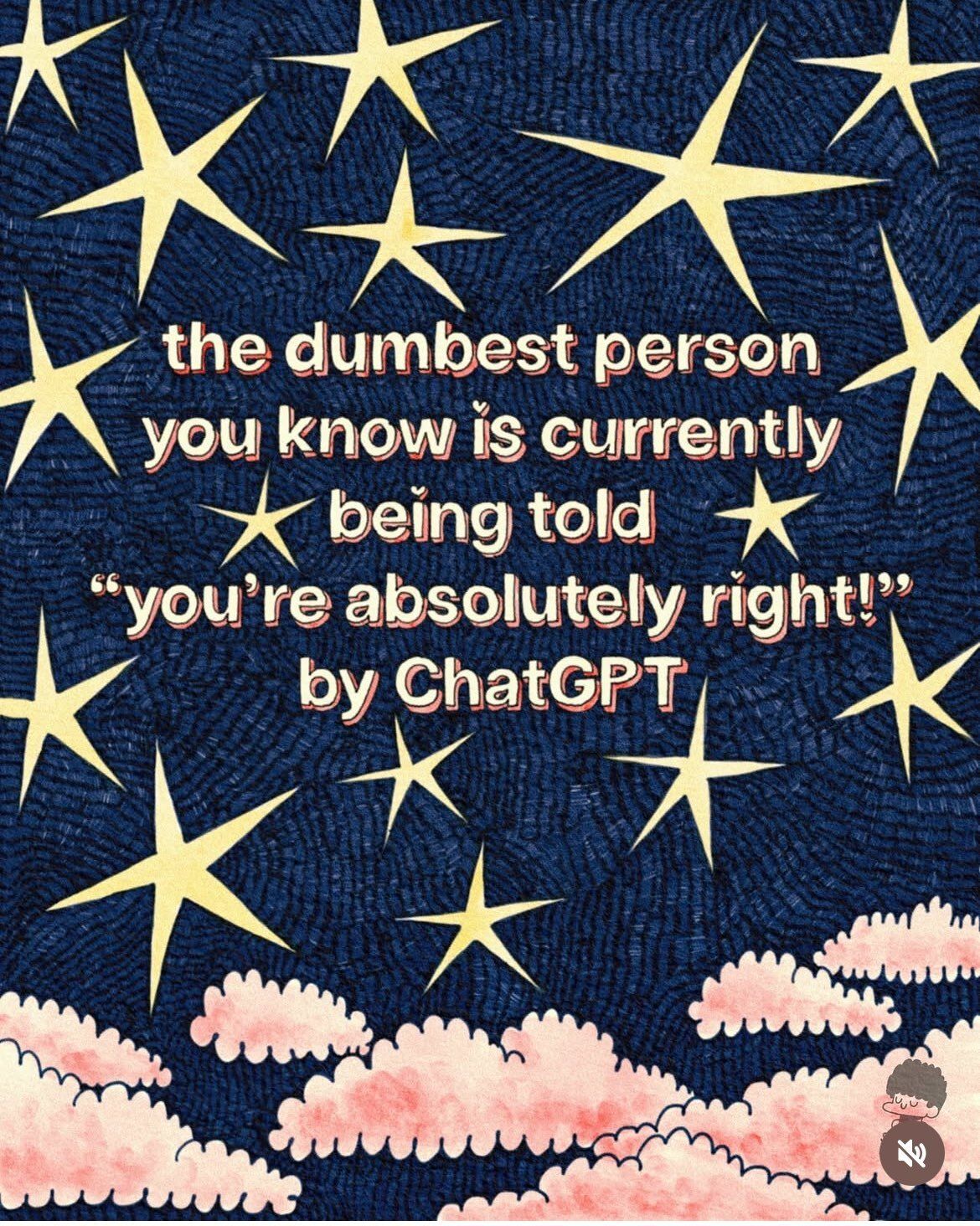
le sigh